Why Airplane Cabins Are So Cold (and What Seasoned Travelers Do About It)
If you have ever wondered whether the plane is cold on purpose, here is the honest answer: mostly, yes. Cabin temperature is set for the whole aircraft, and crews generally err on the cooler side. A packed cabin warms up fast, and a cool cabin is easier on passengers who run hot. If you run cold, you are the one paying for that math.
The blanket that stopped showing up
There was a time when a blanket waited on every seat. On many routes, that time is gone. Some airlines hand them out only on long-haul flights, and even then the blanket is thin, shared between flights, and rarely enough. The seasoned traveler stopped counting on it years ago.
What frequent fliers actually do
Watch the boarding line of any early-morning flight and you will see the strategies. The scarf that is really a small blanket. The oversized cardigan that lives in the tote bag. The hoodie worn backwards like a bib, which works better than it looks like it should. Layering works, but it fills your carry-on with bulk you have to wear or carry all day at your destination.
The two things nobody regrets bringing
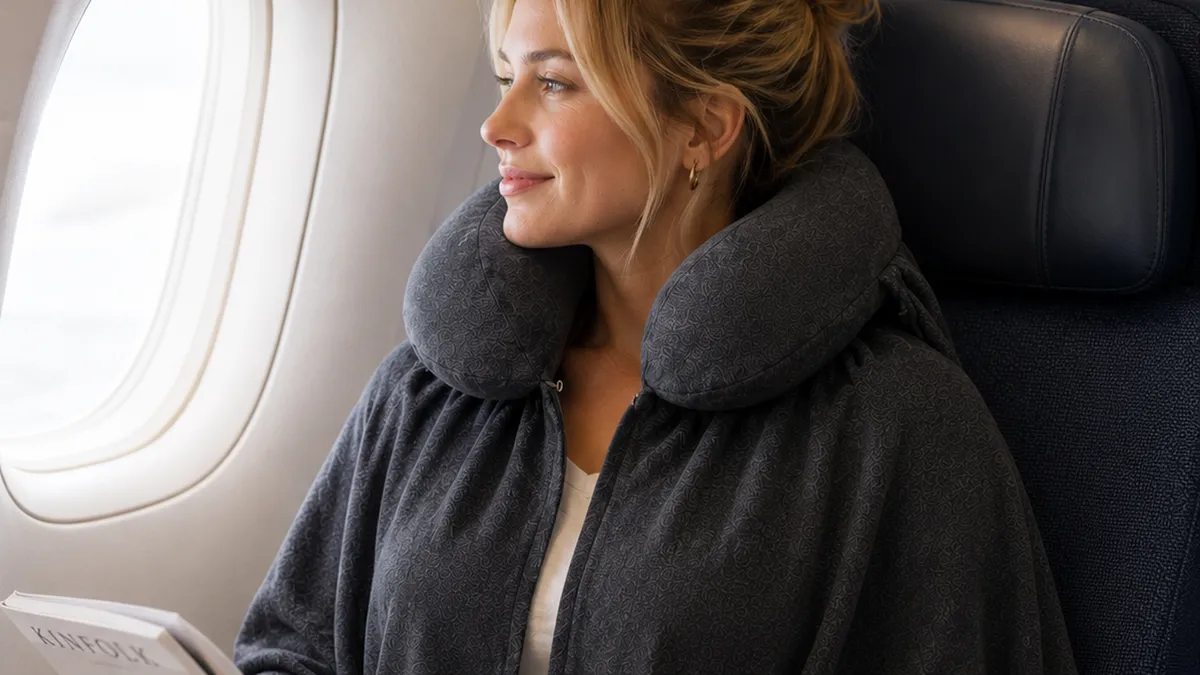
Ask around and the same two answers come back: something for the neck, and something for warmth. Neck support keeps you from arriving with that stiff, tilted feeling that follows you to baggage claim. A warm layer keeps your shoulders, arms, and lap from spending five hours tense against the chill. Most people solve these with two separate items. We started Schneck because we kept wishing they were one.
A note for the window seat
The cabin wall is cooler than the air around it, and window-seat sleepers lean right against it. If that is you, put a layer between your shoulder and the wall and you will feel the difference before the seatbelt light goes off.
The waitlist is open if you would like to be first to know when Schneck is ready. Until then: dress for the cabin you are getting, not the one you were promised.
